

Medicare Learning Center
What Is Medicare and How Does It Work?
Medicare is federal health insurance for Americans 65 and older (and some younger people with disabilities). It covers hospital stays, doctor visits, and prescriptions through four parts, A, B, C, and D. In 2026, most people pay $0 for Part A and $202.90/month for Part B.
What Are Medicare Parts A Through D?
Medicare is divided into four parts. According to CMS.gov, over 67 million Americans are enrolled in Medicare as of 2026. Here's what each part covers and costs.
Hospital Insurance
Covers inpatient hospital stays, skilled nursing facility care, hospice care, and some home health care. Most people don't pay a premium for Part A if they or a spouse paid Medicare taxes while working.
Usually $0 premium
Medical Insurance
Covers doctor visits, outpatient care, preventive services, durable medical equipment, and some home health services. There's a standard monthly premium.
$202.90/month (2026)
Medicare Advantage
Offered by private companies, combines Part A & B (and usually Part D). Often includes extra benefits like dental, vision, and hearing. Must still pay Part B premium.
Varies by plan
Prescription Drug
Helps cover the cost of prescription drugs. Offered by private companies either as standalone plans or as part of Medicare Advantage.
~$35/month average
When Can You Enroll in Medicare?
According to Medicare.gov, missing your enrollment window can result in permanent premium penalties of 10% per year for Part B and 1% per month for Part D.
Initial Enrollment Period (IEP)
The 7-month window around your 65th birthday (3 months before, your birthday month, 3 months after). This is your best chance to enroll without penalties.
Annual Enrollment Period (AEP)
October 15 through December 7 each year. You can switch Medicare Advantage plans, join or drop a Part D plan, or switch from Advantage to Original Medicare.
Medicare Supplement Open Enrollment
6-month window starting when you're 65+ AND enrolled in Part B. During this window, companies can't deny you or charge more due to health conditions.
Special Enrollment Periods
If you have employer coverage, you may qualify for a special enrollment period when that coverage ends - without late enrollment penalties.
Should You Choose Medicare Supplement or Medicare Advantage?
This is the biggest decision most Medicare beneficiaries face. According to KFF, about 54% of Medicare beneficiaries are on Original Medicare while 46% choose Medicare Advantage. Here's an honest side-by-side comparison.
| Feature | Medicare Supplement | Medicare Advantage |
|---|---|---|
| Monthly Premium | Higher premiums ($120-$300+) | Often $0 (plus Part B premium) |
| Out-of-Pocket Costs | Low and predictable | Higher and less predictable |
| Doctor Choice | Any doctor that accepts Medicare | Usually network-restricted |
| Referrals Needed | No | Often yes (HMO plans) |
| Travel Coverage | Better nationwide coverage | Limited to service area |
| Extra Benefits | No (dental/vision separate) | Often includes dental, vision, hearing |
| Drug Coverage | Separate Part D plan needed | Usually included |
| Best For | Those who want predictability and freedom | Those who want lower premiums and extra benefits |
How Much Does Medicare Cost in 2026?
Medicare Supplement (Plan G)
$100 to $300+/mo
Most popular plan - covers almost everything Original Medicare doesn't. Costs vary by state, age, and carrier.
Medicare Advantage
$0 to $50/mo
Lower premiums but higher costs when you use care. Out-of-pocket max up to $8,300/year.
Part D Drug Plan
$0 to $100+/mo
Costs vary based on medications you take. Average around $35/month. New $2,100 annual out-of-pocket cap in 2026.
Costs are approximate national ranges for 2026. Your actual costs depend on age, location, tobacco use, and plan chosen. Source: CMS.gov
What Are the Most Common Medicare Mistakes?
Missing Your Initial Enrollment
Late enrollment can mean permanent premium penalties and coverage gaps. The Part B penalty is 10% per year, for life.
Not Understanding Networks
Medicare Advantage plans restrict which doctors you can see - check before you enroll.
Ignoring Part D
Even if you don't take medications now, late Part D enrollment means paying a 1% per month penalty later.
Choosing on Premium Alone
The cheapest plan monthly may cost more overall when you factor in copays and deductibles.
Waiting to Get a Supplement
After your 6-month open enrollment period, health issues can mean higher premiums or denial.
Not Reviewing Coverage Annually
Plans change every year. What worked last year may not be your best option this year.
From the Blog: Medicare Deep Dives
In-depth articles to help you make smarter Medicare decisions.
Medicare Supplement vs. Advantage: Which Is Better?
An honest, comprehensive comparison with real cost scenarios.
Read MoreTurning 65? Your Complete Medicare Checklist
Everything to do before and after your 65th birthday.
Read MoreHow Much Does Medicare Cost in Nebraska in 2026?
Every cost broken down with real dollar amounts.
Read MoreDoes Medicare Cover Ozempic & Weight Loss Drugs?
What's covered under Part D in 2026 and how to find the best plan.
Read MoreMedicare vs. Medicaid: What's the Difference?
The #1 most-asked insurance question, answered clearly.
Read MoreCommon Insurance Mistakes to Avoid
The enrollment and coverage errors that cost people thousands.
Read MoreWhere Can You Find Local Medicare Help?
Medicare plan availability varies by ZIP code. Find guidance specific to your area - all consultations are free.
Free Downloadable Guides
Enter your email to get instant access. We'll also send a copy to your inbox.

Free Medicare Enrollment Guide by Nick Depke
A step-by-step walkthrough of Medicare enrollment - deadlines, plan options, and what to watch out for.
- ✓The 5 costly Medicare mistakes most seniors make
- ✓Enrollment timeline with key deadlines
- ✓How to choose between Supplement and Advantage
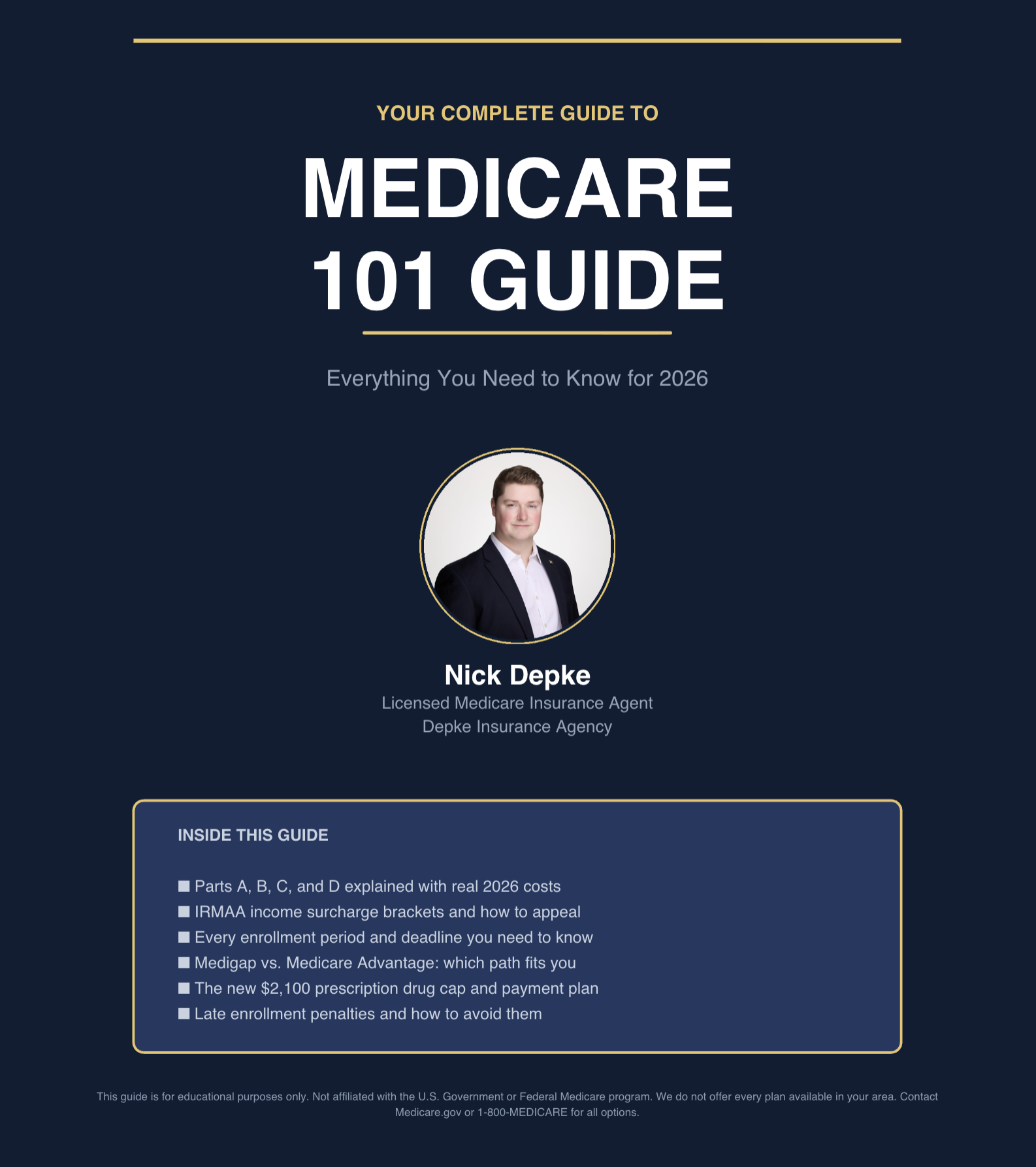
Medicare 101: The Complete Visual Guide (2026)
A comprehensive visual guide covering all the Medicare basics - parts, costs, timelines, and how to choose the right plan.
- ✓Parts A, B, C, and D explained with real 2026 costs
- ✓Side-by-side comparison of Supplement vs. Advantage
- ✓Enrollment scenarios and penalty avoidance
Frequently Asked Questions About Medicare
Medicare Tools & Resources
Medicare Plan Finder Quiz
5 quick questions to see which plan type fits you.
How Medigap Pricing Methods Work
Community-rated, issue-age, and attained-age explained.
Extra Help & Savings Programs
Lower drug costs and Medicare Savings Programs.
Free Medicare 101 Guide
A plain-English download covering the basics.
Free Enrollment Guide
Timing, penalties, and the windows that matter.
Medicare Cost Calculator
Estimate your 2026 monthly Medicare cost by plan mix.
Medicare Resources for Your Area
Quote Coverage Yourself
Prefer to run your own numbers? Compare real plans and pricing in minutes.
ACA Health Insurance
Browse marketplace plans and see your estimated subsidy.
View ACA PlansMedicare Plans
Quote Advantage, Supplement, and Part D plans in your area.
View Medicare PlansLife Insurance
See term and coverage options with a quick, no-obligation quote.
Get Life QuoteLicensed advisors available if you want a second set of eyes