

Medicare Education

    What Are the Most Common Medicare Questions?

    Medicare has four parts, multiple enrollment windows, and dozens of plan options, it's no wonder people have questions. Below are the 12 questions we hear most often, answered with 2026 costs and current CMS data. The short answer: most people pay $202.90/month for Part B, $0 for Part A, and need either a Supplement or Advantage plan to avoid uncapped out-of-pocket costs.

    View Medicare Plans in Your Area

    Compare Medicare Advantage and Medicare Supplement plans available where you live. No obligation.

    Your Initial Enrollment Period (IEP) is a 7-month window: 3 months before you turn 65, your birthday month, and 3 months after. If you're still working with employer coverage (20+ employees), you can enroll during a Special Enrollment Period when that coverage ends, you get 8 months to sign up penalty-free.

    Part A (hospital) and Part B (medical) are the foundation, they cover about 80% of most healthcare costs. Part D (prescriptions) is strongly recommended even if you don't take medications, because the late penalty is 1% per month of delay and it's permanent. Part C (Medicare Advantage) is an alternative way to receive Parts A, B, and usually D through one private plan.

    Medicare Advantage replaces Original Medicare with a private plan (typically $0 premiums but network restrictions, copays, and out-of-pocket max up to $8,300). Medicare Supplement works alongside Original Medicare, covering the 'gaps' in coverage ($100 to $300+/month premiums but freedom to see any doctor and predictable costs). About 54% of beneficiaries choose Advantage; 46% stay on Original Medicare.

    Part A is $0 for most people (if you or your spouse paid Medicare taxes for 10+ years). Part B is $202.90/month (standard). Part B deductible is $283/year. Part A deductible is $1,736 per benefit period. Part D averages ~$35/month with a new $2,100 annual out-of-pocket cap. Medicare Supplement plans range from $80 to $450+/month depending on the plan and your age.

    Yes. During the Annual Election Period (October 15, December 7), you can switch Medicare Advantage plans or go back to Original Medicare. If you have a Medicare Advantage plan, you also have the Medicare Advantage Open Enrollment Period (January 1, March 31) to switch to another Advantage plan or return to Original Medicare + Medigap (subject to underwriting).

    Original Medicare (Parts A & B) does NOT cover outpatient prescriptions. You need either a standalone Part D plan or a Medicare Advantage plan that includes drug coverage. New for 2026: Part D now has a $2,100 annual out-of-pocket cap, meaning your costs are capped once you reach that amount.

    Original Medicare does NOT cover routine dental, vision, or hearing. Some Medicare Advantage plans include these benefits, about 97% of Advantage plans offer dental, and 95% offer vision coverage according to KFF. Otherwise, you'd need standalone dental/vision plans ($15 to $50/month).

    Late enrollment penalties can apply and are permanent. For Part B, it's 10% of the standard premium for every 12-month period you could have had it but didn't, this penalty lasts for life. For Part D, it's 1% of the national base premium per month of delay. Example: 2 years late on Part B = 20% higher premiums forever.

    With Original Medicare + a Supplement plan, you can see any doctor in the country that accepts Medicare (97% of doctors do, according to CMS). With Medicare Advantage, you're typically limited to the plan's network (HMO or PPO). Always verify your doctor is in-network before enrolling in an Advantage plan.

    If you have employer coverage through your current employer (or your spouse's) with 20+ employees, you may delay Parts B and D without penalty. However, if you work for a company with fewer than 20 employees, Medicare becomes your primary insurance at 65, and you should enroll. Most people still take Part A at 65 since it's free.

    Plan G is the most popular for new enrollees - it covers nearly everything except the Part B deductible ($283/year in 2026). Plan N is a good budget option with small copays ($20 office, $50 ER). High-Deductible Plan G has the lowest premiums ($30 to $80/month) but a $2,870 annual deductible.

    Yes. Extra Help (Low Income Subsidy) saves qualifying beneficiaries an average of $5,300/year on Part D costs. Medicare Savings Programs can pay your Part B premium ($202.90/month). Eligibility is based on income, individuals earning under ~$22,590/year may qualify for full Extra Help.

    Sources: CMS.gov, KFF.org, Medicare.gov

    Free Downloadable Guides

    Enter your email to get instant access. We'll also send a copy to your inbox.
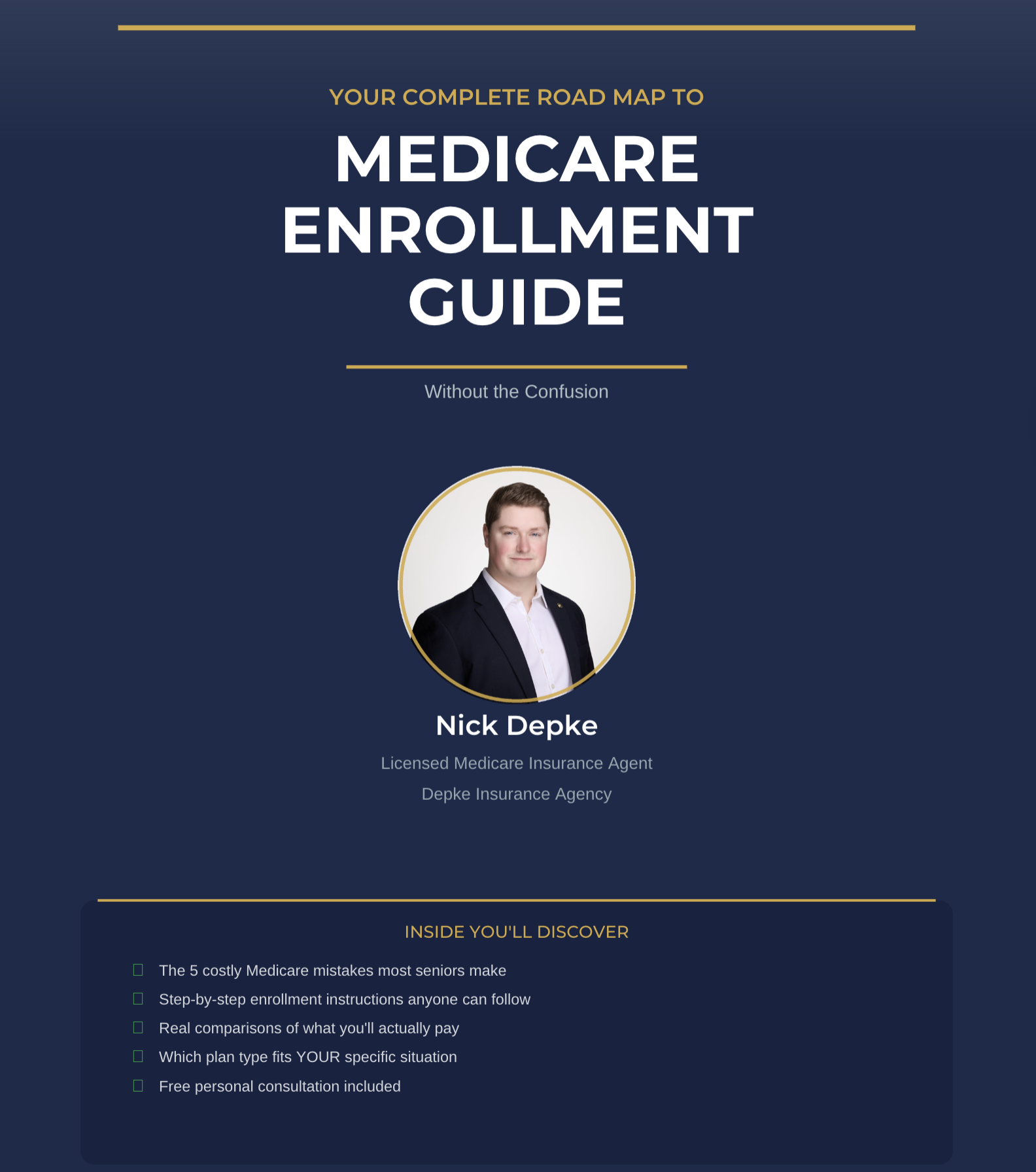
    Preview of Free Medicare Enrollment Guide by Nick Depke

    Free Medicare Enrollment Guide by Nick Depke

    A step-by-step walkthrough of Medicare enrollment - deadlines, plan options, and what to watch out for.

    • The 5 costly Medicare mistakes most seniors make
    • Enrollment timeline with key deadlines
    • How to choose between Supplement and Advantage
    Download Free Guide
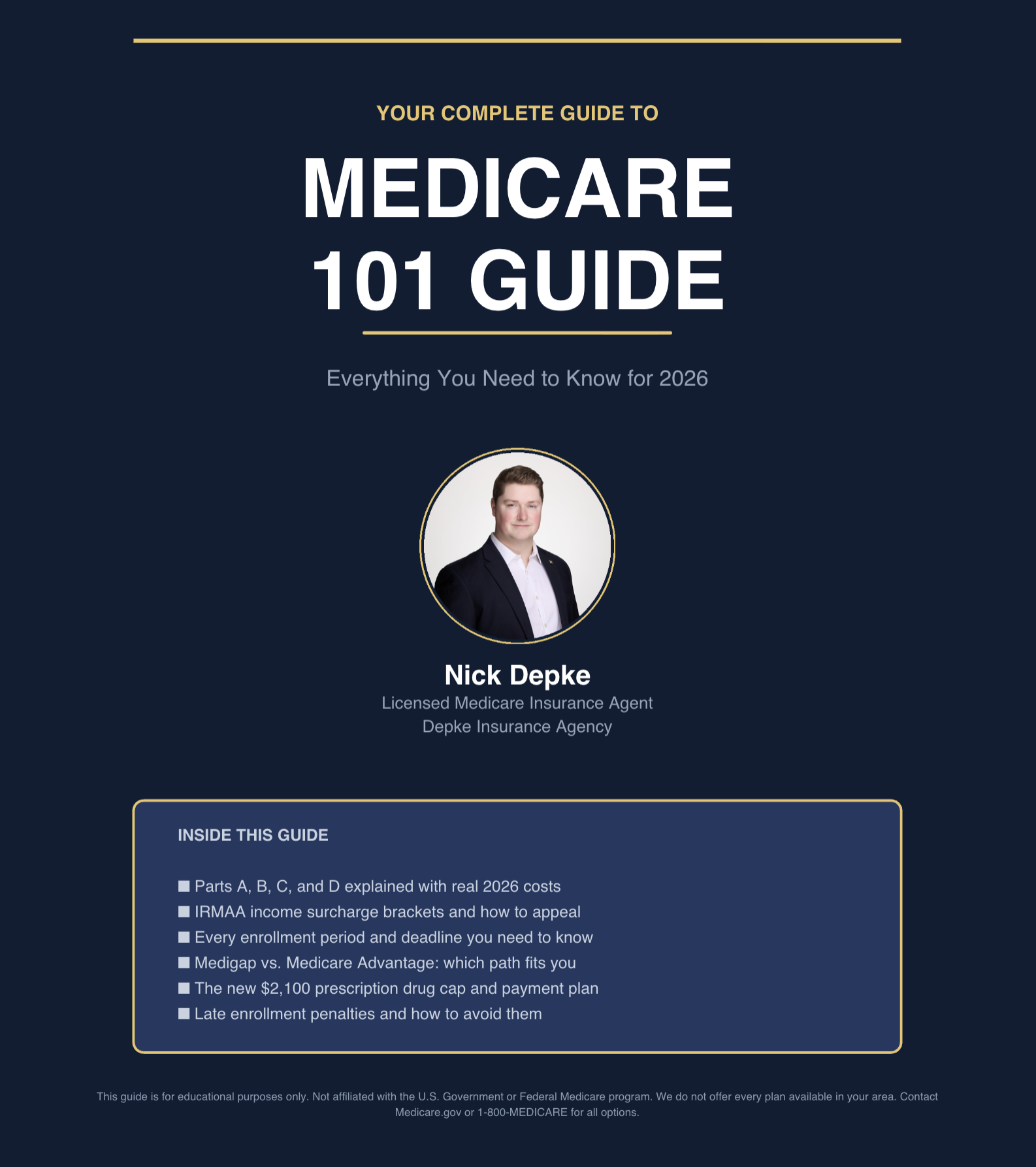
    Preview of Medicare 101: The Complete Visual Guide (2026)

    Medicare 101: The Complete Visual Guide (2026)

    A comprehensive visual guide covering all the Medicare basics - parts, costs, timelines, and how to choose the right plan.

    • Parts A, B, C, and D explained with real 2026 costs
    • Side-by-side comparison of Supplement vs. Advantage
    • Enrollment scenarios and penalty avoidance
    Download Free Guide

    Still Have Questions?

    Medicare can be confusing. I'm here to answer your specific questions - no sales pitch, just honest guidance.

    Ask Your Question

    Ready to Find the Right Coverage? Get a Free Quote

    Tell me about your situation and I'll research the best options for you - no obligation, no pressure. Takes about 3 minutes.